The Economic and Financial Crimes Commission (EFCC) has described Hushpuppi as “Nigeria’s most-wanted hacker” who has a case to answer with the agency.
In a statement released today June 18 by its spokesperson, Dele Oyewale, the agency said it is working with the FBI to trace the victims of Hushpuppi’s alleged fraudulent transactions as well as trace other fraudsters that might have direct involvement with him.
The statement reads;
”Nigerian most-wanted hacker, Ramoni Igbalode, alias Ray hushpuppy, recently arrested by the International Police( Interpol) and the Federal Bureau of Investigation( FBI), has considerable cases of cyber crimes being investigated by the Economic and Financial Crimes Commission( EFCC).
The Commission is familiar with grisly details of his money laundering transactions, involving many high-profile cyber criminals facing trial in Nigeria.
The Commission is engaging with the FBI in tracing victims of his fraudulent transactions and other fraudsters having direct involvement with him. Local cyber criminals with money laundering networks with him, are also being investigated.”
Hushpuppi was arrested on Wednesday, June 10, 2020 in the United Arab Emirates in connection with an alleged $35million ventilator scam. He is still being held in Dubai
The Federal Government has explained why domestic flights will no longer resume operation from June 21.
The Presidential Task Force on COVID-19 had proposed June 21 for resumption of domestic flights.
The Minister of Aviation, Hadi Sirika, however stated on Thursday during the PTF briefing that the proposed resumption date was no longer.
He stated more works must be done before flights can resume, adding it would be disastrous to keep the June 21 date.
He also explained that a new date would be fixed after report is submitted the Task Force for review next week.
Giving an update on the level of preparedness of the aviation sector to resume domestic flight, the Minister who was represented by the Director-General of the Nigerian Civil Aviation Authority (NCAA), Captain Musa Nuhu, highlighted reasons why the date was no longer feasible.
He said: “We developed a circular and sent to all stakeholders to develop a restart plan and submit to the regulatory body for review and approval depending on the business of the service providers.
“The restart plan is meant to cover airworthiness, operations, passenger licencing, aviation security, safety management system, consumer protection, and air transport regulation. These are the regulatory technical requirement but most importantly, the COVID-19 protocols under the public health corridor concept.
“This public health corridor concept was developed in collaboration with federal health authorities including federal ministry of health, NCDC and Port Health services in addition to guidelines from the World Health Organisation (who) and other international organisations.
“Currently, a lot of service providers have provided their restart plans and the plans are supposed to be reviewed by NCAA; the regulator of the industry.
“We are going to review the documents and if we are happy with the documents, then we will go to each individual organization to verify what they have given as their restart plan.
“A lot of work has been done and a lot of the service providers have provided good documents while some provided inadequate documents and their documents were sent back to them significant progress has been made but there is still a lot of work to be done.”
On why the proposed date was no longer possible, he said: “The aviation system is a very complex system and this complex system has been compounded by the public health care concept which a lot of the aviation the sector is not used to implementing. Now, we have to develop and implement these systems to ensure that the aviation industry is not a vector for mass transmission of the coronavirus.
“It is also our responsibility to ensure that operations are safe and secure. The industry has been grounded for close to three months now and we have to ensure that all aircraft are checked, they are airworthy, all pilots will have to check their proficiency and ensure that they are update, we have to ensure our security at the airports are up to date and so many other areas.”
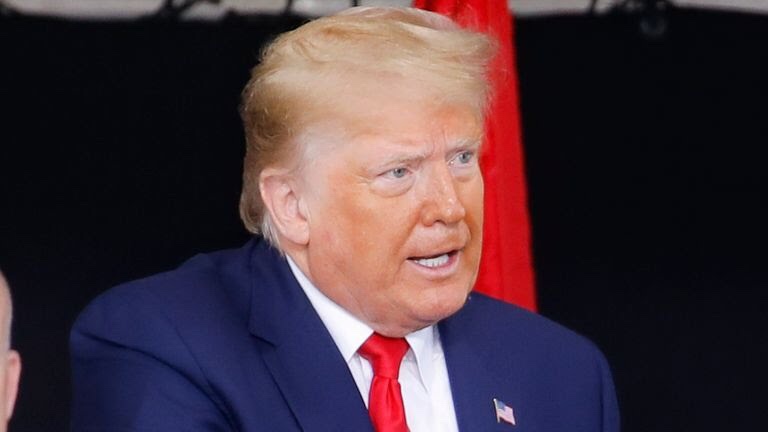
President Donald Trump has reacted to the shooting at Rayshard Brooks which led to an Atlanta police officer, Garrett Rolfe being charged with felony murder on Wednesday June 17.
Though Prosecutors said Brooks posed no threat when he was gunned down and that the white officer kicked him and offered no medical treatment as he laid dying on the ground, Trump insisted that the police has not been treated fairly as no one should “resist a police officer”.
Speaking on a Fox interview, the US President also said he heard an explanation from Rolfe’s lawyer that the officer heard a sound like a gunshot and saw a flash in front of him.
He said;
“I don’t know that I would have necessarily believed that, but I will tell you, that’s a very interesting thing and maybe that’s so. They are going to have to find out. It’s up to justice right now. It’s going to be up to justice. I hope he gets a fair shake because police have not been treated fairly in our country. They have not been treated fairly.”
Atlanta mayor, Keisha Lance Bottoms had said the morale in the police department was “down ten-fold” due to the charges.
In an interview with CNN on Wednesday night, Bottoms said “we expect our officers will keep their commitment to our communities” amid reports that officers were calling in sick.
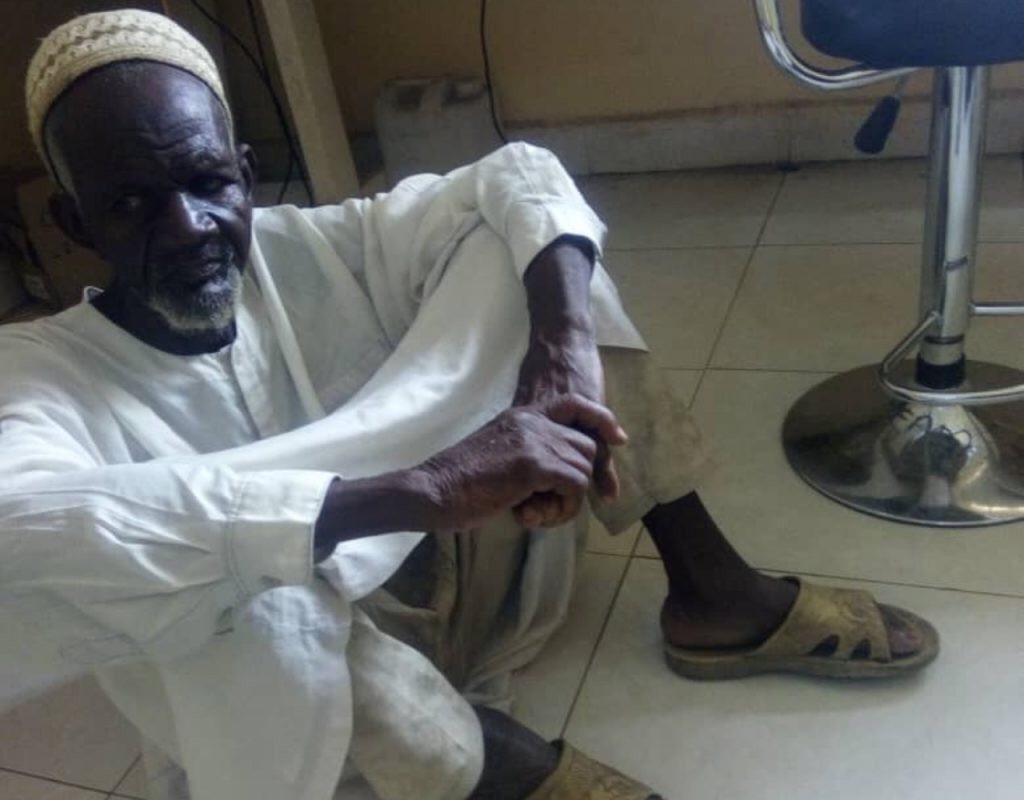
An 80-year old man, Mohammed Bara’u of Lawan Fannami ward in Gashu’a community of Yobe State has been arrested for allegedly defiling a 10-year-old girl.
It was gathered that the suspect who is a wood seller had been trying to lure the girl with chocolate and finally succeeded last Sunday after asking her to pick something from his room. He reportedly followed and forcefully had carnal knowledge of her.
He was arrested after the case was reported to the police by Bade Local Govt Shari’a Committee and some local NGOs.
Medical examination conducted on the girl who lost her parents few years ago, confirmed the she was defiled. The old man who confessed to raping the little girl once, will be transferred to CID office in Damaturu on Friday June 19.
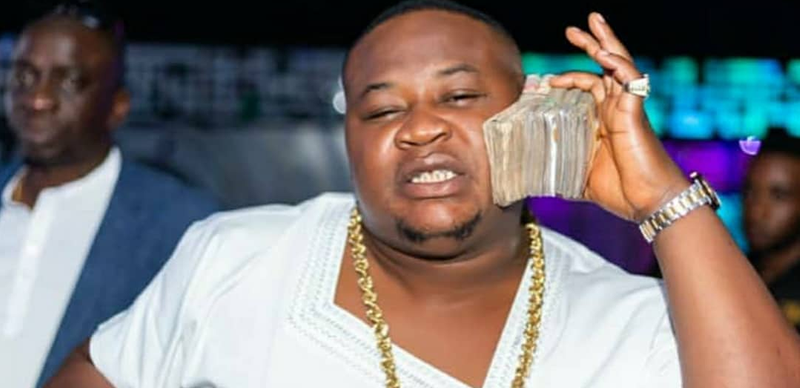
The Inspector-General of Police Monitoring Unit in Lagos State has detained Instagram celebrity and Executive Director of Cubana Group, Pascal Okechukwu, popularly known as Cubana Chief Priest.
Cubana was invited to the Force Headquarters Annex Lagos today for questioning on his alleged ”abuse of police escorts and his unexplainable wealth”. He arrived at the police annex at about 10am this morning and has been with the police, answering questions from the officers.
A police source who confirmed this, said his invitation was sequel to an order from the Office of the Inspector-General of Police, Mohammed Adamu, who has expressed shock at how some Nigerians abuse police personnel attached to them.
”We have detained Cubana Chief Priest and he is facing interrogation for misuse of police personnel as well as the illegal use of a weapon and his extravagant and unexplained lifestyle.” the source said
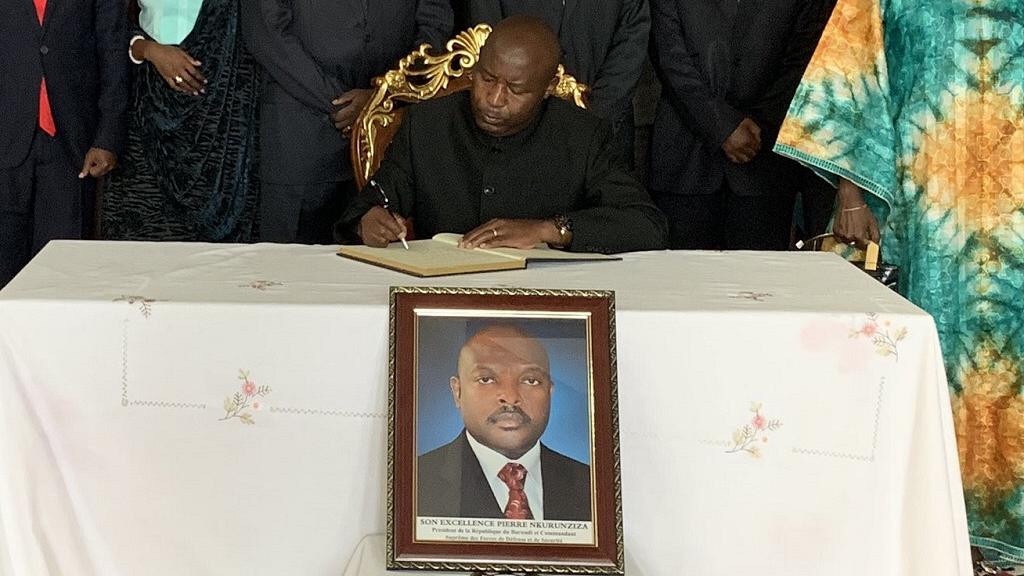
Evariste Ndayishimiye has been was sworn in as the new president of Burundi after the sudden death of his predecessor, Pierre Nkurunziza.
Ndayimishiye, who won the May 20 elections was originally supposed to take over in August but the Constitutional Court ruled that the investiture be brought forward following the death of the outgoing president.
The 52-year-old was sworn in on Thursday at the Ingoma stadium in the capital city, Gitegay.
Before taking the oath, Ndayishimiye knelt surrounded by the leaders of the Catholic, Anglican, evangelical and Muslim faiths, who prayed for him.
“Understand that you are a son of God and as such must bring peace among Burundians, you know how much we need it,” said the Catholic archbishop of Gitega, Simon Ntamwana.
“Bring back to our country the refugees in the camps, bring back the intellectuals in exile so that they can take part in the development of our country, renew ties with the international community so they can help us develop,” he said.
Mr. Ndayishimiye, a father of six and a practicing catholic, pledged to “devote all his force to defending the superior interests of the nation and ensure the national unity and cohesion of the Burundian people, peace and social justice.”
Pierre Nkurunziza., who ruled the East African nation for 15 years died at the age of 55 after suffering a heart attack last week.
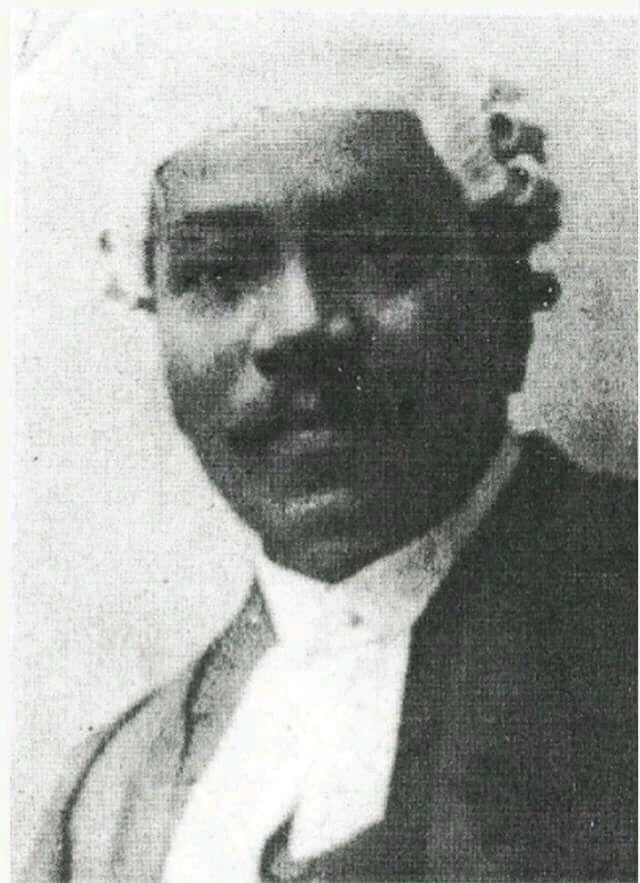
NIGERIA’S FIRST INDIGENOUS LAWYER: HISTORY VILLE Christopher Alexander Sapara Williams (July 14, 1855 – March 15, 1915), son of an ljesha father from llesha, Osun State, and an Egba mother from Abeokuta, Ogun State, was the first indigenous Nigerian lawyer called to the English bar. He also played a prominent political role during Nigeria’s colonial days. Williams was also the elder brother of Oguntola Odunbaku Sapara (1861 – 1935), a prominent physician who was best known for his campaign against secret societies that were spreading smallpox. When Northern and Southern Nigeria were united in 1914, the new legislative council was headed by the Governor and consisted of seven British officials, two British non-officials and two Nigerians, one of whom was Williams. He died on March 15, 1915 at age 59.
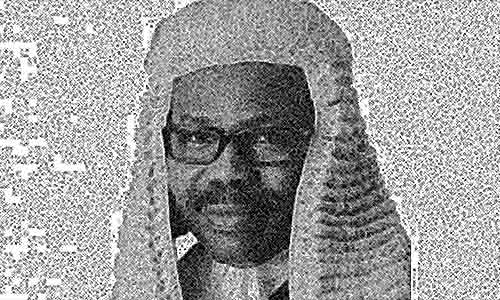
Dr. Babatunde Ajibade, SAN, FCIArb) This morning, a colleague drew my attention to a news item by Adesina Adegbite complaining about an attempted disqualification of my brother silk, Dele Adesina, SAN and one Adeola Ademilola running for National and Branch offices respectively.
While I am flattered by the thought that I am capable of controlling the leadership of a Branch which I am not a member of, I state categorically that I do not have any hand to play in whatever is happening in the Ikeja Branch as well as any steps to disqualify any party.
While I am flattered by the thought that I am capable of controlling the leadership of a Branch which I am not a member of, I state categorically that I do not have any hand to play in whatever is happening in the Ikeja Branch as well as any steps to disqualify any party.
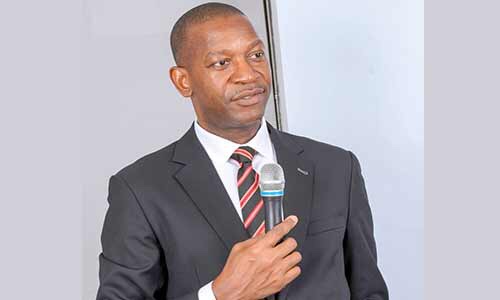
Muiz Banire SAN Th’ expense of spirit in a waste of shame
Is lust in action; and till action, lust
Is perjured, murd’rous, bloody, full of blame,
Savage, extreme, rude, cruel, not to trust
– Shakespeare, Sonnet 129
Close to half a millennium after the English man of letters, William Shakespeare, gave the murderous description of lust in his evergreen poetic work quoted above, a section of Nigerian youths seems to have found fashionable the deplorable act condemned by the great poet. A twin-issue that has gained so much traction in public discourse in Nigeria in the last few weeks is rape and other sexual offences.
According to the police, between January and May 2020, over 717 cases of rape have been officiallyreported in Nigeria. In a country with virtually no data, or where the integrity of data is ever challenged and where there are more than enough constraints to reporting incidents of this nature, I reckon that the figure might not be less than 10 times the declared number. Beyond the stigma that our society puts on the victims of sexual offences, particularly rape, and cultural inhibitions to official reporting, particularly where the offender is a close relation, the attitude of law enforcement is equally unhelpful. The point, however, is that, as much as great emphasis is being placed on rape in recent times, there are several other acts of sexual assault and harassment going on around us daily without anybody giving a hoot. Before delving into the meat of this piece, it is necessary and compelling to treat us with the appreciation of the different types of sexual offences that exist. This is so because there is a measure of misgiving, in my view, from the wording of the law on the meaning of rape. Although the laws on rape and sexual offences enjoy different complexions across the nation, I will, for the purpose of my analysis, adopt the Criminal Law of Lagos State.
Under the said law, rape occurs where a man has sexual intercourse with a woman without her consenting to the act. To be guilty of rape, therefore, the first ingredient to be proved is lack of consent. This raises the question of the meaning of consent in the circumstance. According to the law, a woman or girl consents where she is of full capacity to make a decision and she so chooses to participate in the circumstances of the sexual act. I dare say, she must be of sound mind and alert, in addition. What this connotes is that you cannot have a valid consent where the girl is not of age and with a sound mind, and mentally alert. Consequently, where consent was procured through the use of drugs or intoxicants, or the person was unconscious, no consent in law took place. Consent could additionally be tainted by reason of force, impersonation, threat, intimidation of any kind, fear of harm or false or fraudulent representation as to the nature of the act. The import of this is that she must clearly understand what she is consenting to, otherwise, such consent will be invalid. Another essential of proving rape is penetration. In my view, penetration is best established in court through medical evidence. That is why it is advisable that you visit your clinic immediately after the incident for examination and confirmation of penetration. Upon the proof of rape, the offender is liable to be sentenced to life imprisonment in some states.
The precursor to rape, in most cases, is sexual assault. This involves sexually touching another person without his/her consent. Touching, according to the law, may be done with any part of the body or with anything else. Unlike in rape, where the suggestion of the law is that only a woman can be raped, which is not conceded, in respect of this offence, either sex may commit the offence of sexual assault. In fact, any person who penetrates the anus, vagina, mouth or any other opening in the body of another person with a part of his body or anything else, without the person’s consent is guilty of sexual assault. For lawyers, there are more questions to be asked here, but I do not intend to bore you with that. While ordinary sexual assault attracts three years imprisonment, sexual assault with penetration attracts life imprisonment. With regard to anyone who attempts to commit rape or any other sexual act of penetration but fails, the punishment is 14 years. The commonest form of sexual offence is harassment. This is generic in nature as once you sexually harass anybody, you are guilty of the offence and it attracts three years imprisonment. In the view of the law, it includes unwelcome sexual advances, request for sexual favours, and other visual, verbal or physical conduct of a sexual nature which, when agreed to or rejected, leads to impairment of a person’s employment or educational status. The last component of the sexual offences relates to procuring another person without his consent to engage in sexual activity, which penalty is five years, but where it involves penetration, the penalty is life imprisonment. I have gone this far to expose us to the gamut of sexual offences in order to appreciate the nature of and the attitude of the law to the menace.
Let me assert that the commonest forms of sexual offences are sexual harassment and assault. This is where the bulk of what eventually ends up as rape and sexual penetration starts. Thus, as much as I commend the various protesters against rape, I am of the view that energy concentrated on the various protests could have been more productive if part of it were directed against the root causes. This implies that we must initiate a wave of protests against sexual harassments and assault in our society. Rape starts with sexual harassment of a woman, when it happens, we all keep quiet without raising our voices of condemnation. After a while, the rapist moves to the next level of rubbing or brushing his body against the woman, we all laugh it off. Once the rapist is comfortable with this, at the earliest opportunity, the man strikes by raping the victim. Beyond the agitation, we must progress into developing a robust response mechanism.
Presently, we cannot boast of any major complaints channel, as the police and other law enforcement agencies often trivialise the complaints and frustrate the victim and neither do we have well equipped investigators who are conversant with the ingredients of the offence for proper investigation, much less competent prosecutors. In fact, at the magisterial level, most times, prosecutors compromise the prosecution under the guise of settlement through the receipt of paltry sums for the victim’s family. In other climes, the probability of being caught and punished for the devilish act is 98 per cent, while in our nation, it is just about 2 per cent. Where, therefore, lies the deterrence? The message from all these is that we need to urgently convene a session on all the above. Beyond this, various reasons have been advanced for this dastardly behavioir. This takes us from the sociology of victims to that of the perpetrators.
We need to address the cause of the upsurge of this odorous activity in order not to be addressing the consequence alone without uprooting the menace. In some cases, drug usage and abuse account for committal of sexual offences. In some others, mental ailment, which may be a product of drug abuse anyway, encourages sexual assault, and some are even occult in the sense that such was regarded as part of the ordainment of the chief priest, for instance, to become rich. The influence of the social media where all manner of pornography can be watched by hungry youths with a stipend of N100 data cannot be underplayed. We must also realise that the corruption of public morals that occurs on a daily basis in our public spaces like markets, garages and football fields, where some depraved minds are making fortunes from hawking sexual performance enhancers cannot be fully described. Sexual abuse occurs through religious leaders who use their fiduciary positions to lure women under their leadership into involuntary sex while this menace ravages the innocent minds of our adolescents in our schools of learning. We cannot discount the trauma of the housemaids in the hands of their masters nor of the pupils in the hands of their lecturers and teachers.
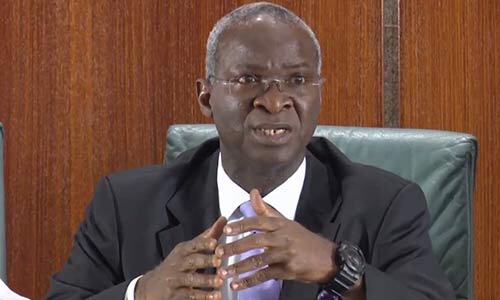
Targets N163bn investment The federal government is determined to outsource repair and maintenance of certain Federal highways, Minister of Works, Babatunde Fashola, dropped the hint on Wednesday at the National Assembly Joint Committee on Works.
The concession arrangement which he called, “Highway Development and Management Initiative,” will involve the federal government and private investors which would carry out the development and management of 10 federal highways in the first phase.
According to the Minister of Works, the roads listed for the first phase which he noted could attract N163bn investment included, Benin – Asaba, Abuja – Lokoja, Kaduna – Kano, Onitsha – Owerri – Aba, Shagamu -Benin, Abuja -Keffi – Akwanga, Kano – Maiduguri, Lokoja – Benin, Enugu -Port Harcourt, Ilorin – Jebba.
Fashola who declared that the federal government bought into the initiative in the face of dwindling revenue available to it and a dearth of public funds for road maintenance further hinted that each of the ten roads listed in the first phase would gulp N16billion.
He, however, painted a rosy picture of the gains of the Value Added Concession to include, creation of about 23, 322 jobs in the first phase, provision of streetlights, toll plazas, rest areas, and weighbridge stations.
He said after the first phase, another ten routes would be identified for the second phase.
“The Value Added Concession through the construction of rest areas will reduce fatigue on the highways thereby causing a reduction in accidents as the routes will be better managed and maintained.
“Through the Value Added Concession, there will be job creation in communities that fall along the route which will bring about an increase in rural development.
“Improvement on weighbridge stations will reduce the incidence of roads having to bear loads above their design weight. This will improve the lifespan of the road pavement.”
Asked about the competence of the prospective investors, the Minister assured that his Ministry would carry out due diligence on the applicants for a thorough evaluation of their technical and financial competence.

 Annawe Ayuba’s Blog